60-hour course
The six-module curriculum allocates 60 hours, including practical training and assessment.
Course fee: INR 12,000 + 18% GST (INR 2,160). Total including GST: INR 14,160.
Confirm exclusions, materials, assessments and payment options with admissions.
Simple code. Big possibilities.
Course duration: 60 hours. Contact admissions for batch dates, daily timings and delivery arrangements.
The six-module curriculum allocates 60 hours, including practical training and assessment.
Start with Python and programming basics; previous coding experience is not required.
Build confidence through guided coding exercises, assignments, and debugging practice.
Apply course topics in a guided project and practical assessment.
Python Programming is a beginner-friendly course designed to help students build a strong foundation in programming and problem-solving. With its simple syntax and wide range of applications, Python is used in software development, data science, artificial intelligence, web development, and automation.
At E Careerpluz, learners progress from basic programming concepts to writing reusable programs, working with files, handling errors, and developing practical applications. The course combines instructor-led sessions, coding exercises, guided projects, and practical assignments.
The six-module curriculum totals 60 hours, including practical training and assessment. Advanced frameworks such as Django, Flask, and machine-learning libraries may be covered in subsequent courses.
Explore programming and logical problem-solving through structured practice.
Build foundational programming skills while preparing for further IT learning.
Start learning to code without prior programming experience.
Strengthen technical skills through a practical Python introduction.
Explore introductory programming concepts that may support future automation learning.
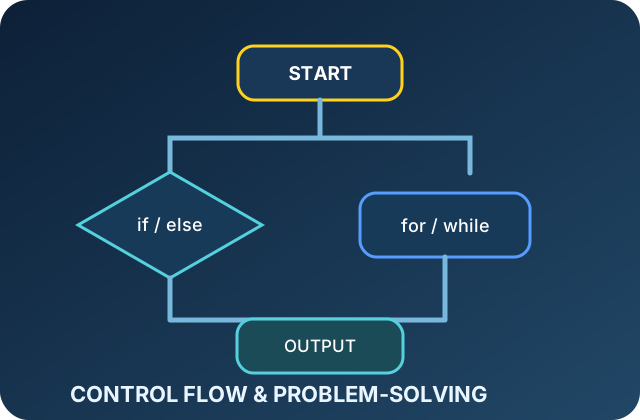
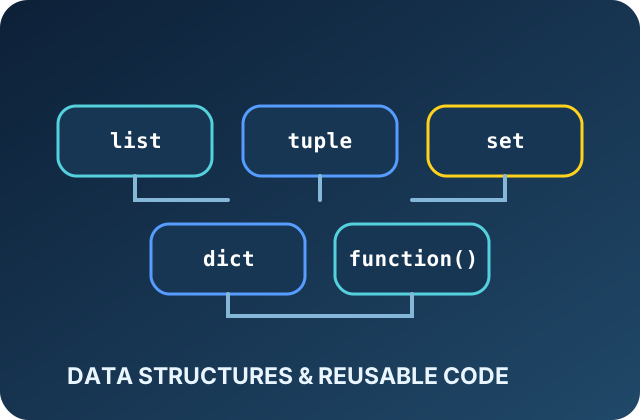
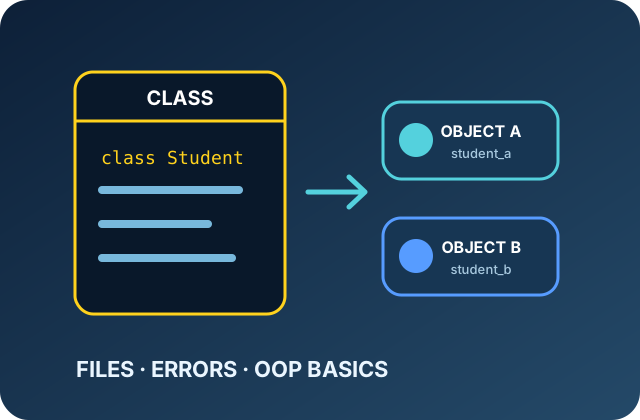
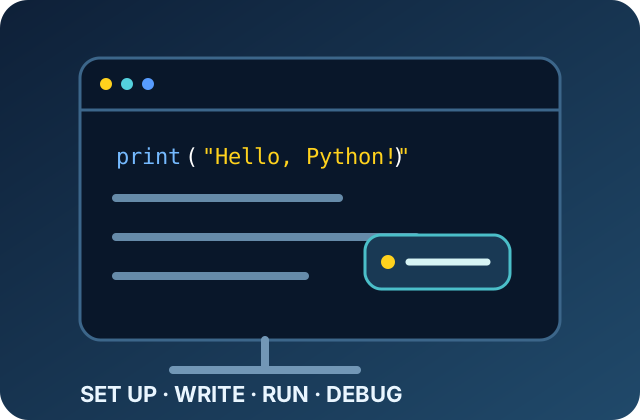
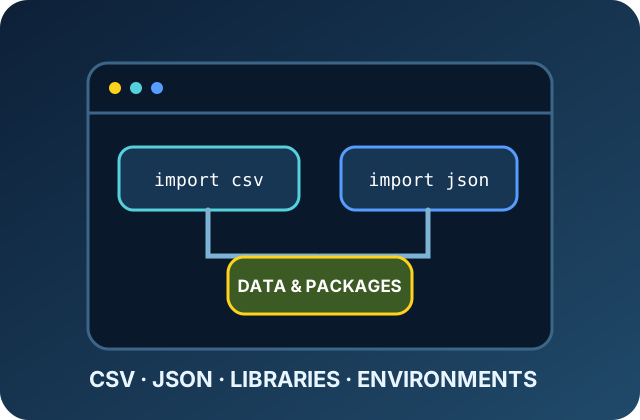
The six modules progress from Python setup and fundamental logic through data structures, functions, files, object-oriented basics, libraries, and project work.
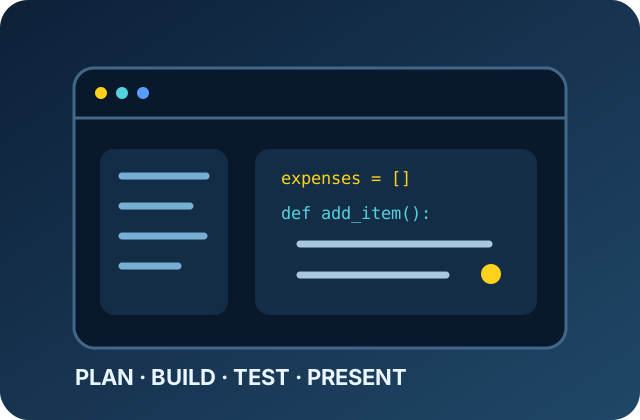
The six-module plan adds up to 60 hours, including practical training and assessment. Confirm the final schedule and module delivery with ECAREERPLUZ.
Explore a beginner programming workflow: write Python code, run and debug programs, practise in an interactive notebook, and organise project files.
Learn syntax, logic, functions, data structures, file operations, and application development.
Write, organise, run, and debug Python programs using a code editor configured for Python.
Practise foundational concepts in a simple environment suited to beginner exercises.
Explore structured data files and interactive Python practice as described.
Learn version-control basics for preserving project history and organising code repositories.
Tool names illustrate the learning plan and do not confirm included subscriptions, provider partnerships, or account access. Confirm device and software requirements with ECAREERPLUZ. Tools are introduced according to the course plan and learner progress. Confirm supported versions, setup requirements, and account access with ECAREERPLUZ. Django, Flask, and machine-learning libraries are not confirmed as part of this introductory course and may be covered in subsequent programs.
Build confidence through useful, beginner-oriented application ideas. The scope and features may be adjusted to match learner progress and available course time.
Create a basic application to add student details, display records, search for students, and update information.
Functions, lists, dictionaries, file handling
Record daily expenses, categorise spending, and calculate totals using Python.
Loops, functions, data structures, CSV files
Build a question-and-answer program that checks responses and calculates scores.
Conditional statements, loops, functions
Write a script that sorts files into folders based on file type using suitable standard-library tools.
File handling, pathlib, operating system modules
Project scope and complexity depend on learner progress and the time available during the 60-hour course. Confirm the final activities and assessment format with ECAREERPLUZ.
By the end of this 60-hour program, learners should be able to:
This course builds a foundation for further study. Advanced roles and applications require continued practice and additional role-specific skills.
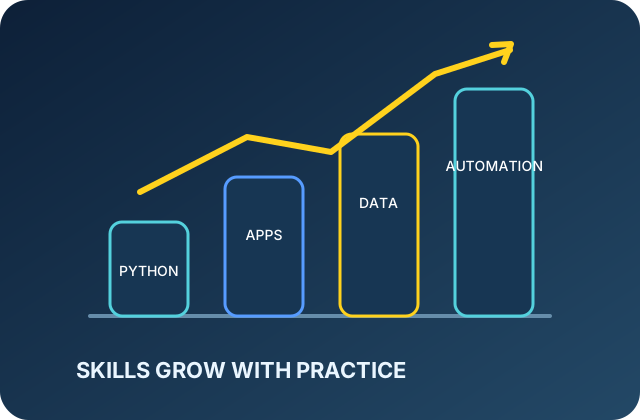
Python skills may support further learning across software development, testing, application support, data analysis, and automation. Actual salaries and eligibility depend on location, experience, technical ability, employer requirements, and project portfolio.
An introductory direction that typically requires practice, coding fundamentals, and readiness to learn in a team.
An early-career pathway involving Python application features, debugging, and collaborative development.
A potential direction requiring further testing knowledge, automation practice, and role-specific tools.
A related direction that may require troubleshooting, communication, and additional platform knowledge.
Possible next directions with further data, reporting, automation, and project experience.
Compare these planning ranges with current local opportunities. Pay varies by role, qualifications, experience and employer.
Build your future: Larger commercial projects may require databases, web frameworks, security practices, deployment knowledge, and client-management skills beyond this introductory course.
ECAREERPLUZ may support learners with career-readiness activities. Confirm the institution's actual placement services, eligibility, and available opportunities before enrolment.
Present programming skills, projects, education, and technical achievements effectively.
Practise Python fundamentals, coding questions, logic, and problem-solving.
Improve communication, confidence, and technical explanations through practice.
Organise mini-projects and code samples for presentation to potential employers.
Explore suitable job roles and identify relevant next skills.
Relevant openings may be shared when available, subject to the institution's actual services and requirements.
Placement support and opportunity updates depend on actual institutional services and availability.
Certificate eligibility, the issuing authority, and course-completion requirements should be confirmed with ECAREERPLUZ.
Certificate eligibility depends on the institution's course-completion and assessment requirements. Contact ECAREERPLUZ for applicable certification details.
Confirm attendance and course-completion criteria with the institution.
Ask whether assignments, project demonstrations, or a practical assessment are required.
Confirm the issuing authority and certificate format before enrolment.
Explore example software engineering projects and learning journeys.
Beginner learner
A beginner practises Python fundamentals and uses coding exercises to develop a first guided application.
Practice focus: Builds a sample program and a foundation for further Python learning.
College student
A college student practises functions, loops, data structures, and debugging through practical assignments.
Practice focus: Documents coding practice and explains a mini-project.
Project-based learner
A learner connects programming concepts to practical applications and plans further technical learning.
Practice focus: Presents a guided project and identifies suitable next learning steps.
Programming learning can be supported by structured lessons, practical coding, regular progress reviews, and clear feedback.
Review lesson completion, assignments, and progress through the confirmed modules.
Evaluate programming logic, code correctness, debugging, and project implementation.
Review quiz results and practical assessments to identify areas for further practice.
Use instructor feedback and learner reviews to refine the learning experience.
Practise writing, testing, and explaining working programs.
| Area | Example metrics |
|---|---|
| Module progress | Review lesson completion and progress through the confirmed learning plan. |
| Coding exercises | Discuss logic, code correctness, and debugging practice. |
| Project implementation | Review application features, testing, and the learner's project explanation. |
These learning-quality activities describe this course. Confirm actual teaching, tracking, and assessment arrangements with ECAREERPLUZ.
Learn from Industry Experts and Experienced Professionals.




The course is intended for people interested in programming, including school students, college students, graduates, working professionals, and beginners. Confirm formal eligibility with ECAREERPLUZ.
No. The course starts with basic programming concepts and gradually introduces further topics. Basic computer familiarity is helpful.
The course duration is 60 hours. Contact admissions for batch dates and the detailed timetable.
The course covers Python fundamentals, control statements, data structures, functions, file handling, exception handling, basic object-oriented programming, libraries, and practical application development.
Suggested projects include a student management system, expense tracker, quiz application, and file organizer. Confirm the final activities and assessment with the course team.
The course builds foundational programming skills for further learning and entry-level exploration. Readiness depends on practical ability, interview performance, portfolio, and employer requirements.
Python is a useful foundation for further AI and machine-learning study. Additional mathematics, data handling, and specialised libraries may be required.
Certificate eligibility depends on the institution's course-completion and assessment requirements. Contact ECAREERPLUZ to confirm the applicable details.
Contact ECAREERPLUZ to confirm the currently available learning modes, batch schedules, and class timings.
Possible next topics include Full Stack Python Development, Django, Flask, Data Analytics, automation, or AI and Machine Learning, depending on your goals.
Course fee: INR 12,000 + 18% GST (INR 2,160). Total including GST: INR 14,160. Confirm exclusions, materials, assessments and payment options with admissions.
Confirm course duration, fees, upcoming batch, learning mode, and final curriculum with our team.
Request course details
Build a strong foundation in programming with C and C++, logical problem-solving, debugging, and guided mini-projects. 60 hours.
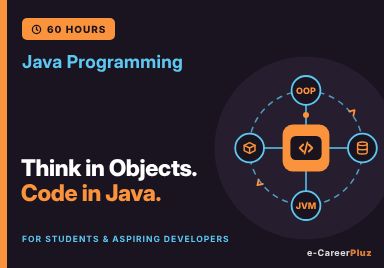
Build a Java programming foundation through guided lessons, practical coding exercises, object-oriented concepts, and a final project. 75 hours.
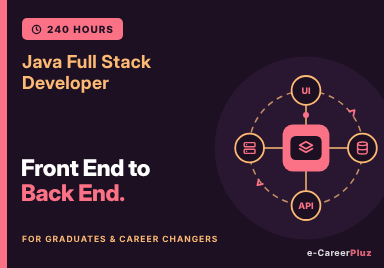
Build front-end, Java back-end, database, REST API, testing, and deployment foundations through 240 hours of practical, project-based learning.
Explore skills, try a small project and find your learning direction.
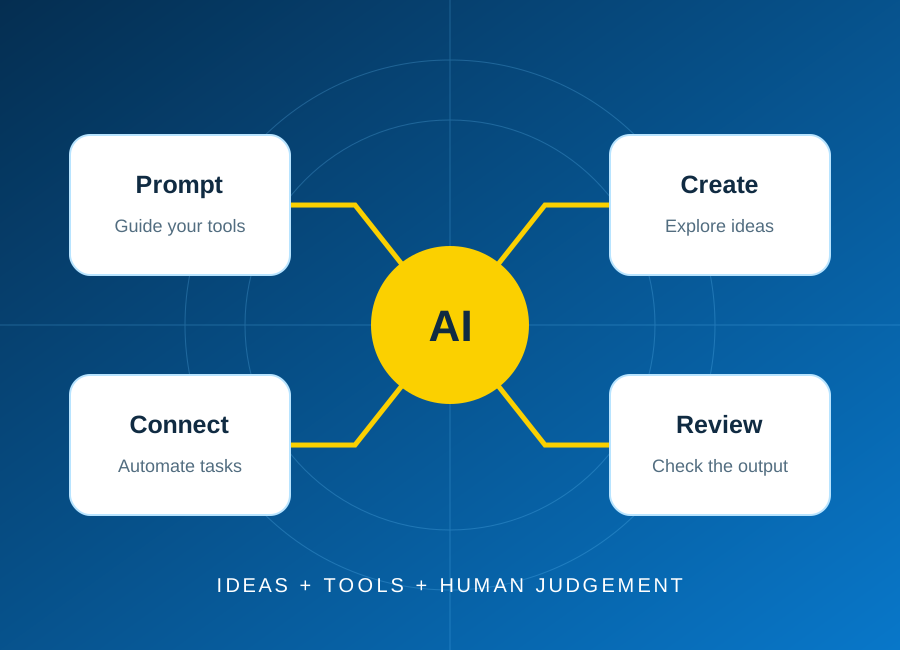
Start with one repeatable task, keep a person in control, and test the result before connecting real business data.
Read article: Plan your first AI automation project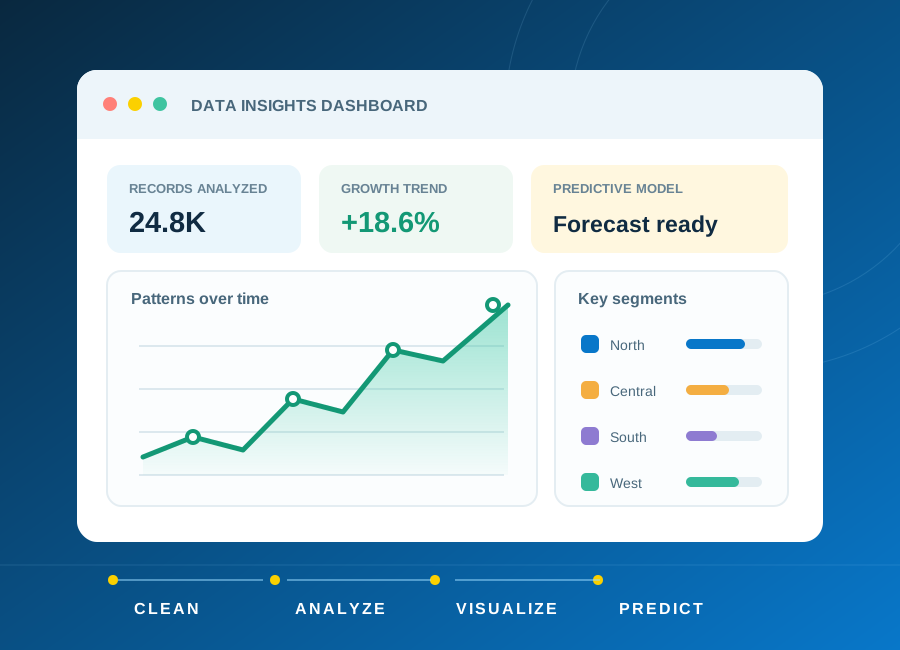
Learn how to frame a question, clean a small dataset and choose charts that explain rather than distract.
Read article: From raw data to a clear, useful dashboard
Turn a small idea into a working application with a clear data model, accessible forms and meaningful tests.
Read article: Build a first web application you can explain